 Join our BBQ community
 eGift card




How to maintain steady temperature in Kamado
One of the biggest advantages of a Kamado grill is its ability to maintain stable temperatures for hours. Whether you’re slow-cooking ribs or searing steaks, temperature control is key to success. In this guide, we’ll break down the essentials of maintaining consistent heat in your Kamado grill.
Start with the right fuel
Use high-quality lump charcoal, not briquettes. Lump charcoal burns cleaner, lasts longer, and gives you better control over heat. At Kamado Bono, we recommend Texas Club Charcoal – a premium lump charcoal made from natural hardwood, available in 10 kg bags. Make sure to fill the firebox with enough charcoal depending on how long you plan to cook.
Light your charcoal properly
Use an electric charcoal starter (link to be added) for an even light and quick ignition. Avoid using lighter fluid or quick-light products—they can cause temperature spikes and leave unpleasant tastes in your food.
Give it time to stabilize
After lighting the charcoal, leave the lid open for 15–20 minutes to let the coals fully ignite and build a solid heat base. Only then should you install the accessories like the stainless steel grate, heat deflector, or other components.
Once everything is in place and the lid is closed, the grill temperature may drop slightly. Let it stabilize for another 5–10 minutes.
If the temperature is still too low after closing the lid, open both the top and bottom vents fully. This will allow maximum airflow, helping the grill heat up more quickly. As the internal temperature approaches your desired level, begin closing the vents gradually.
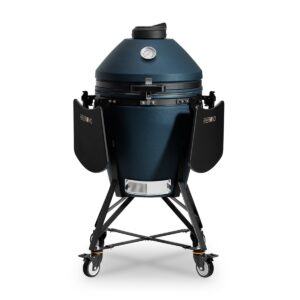
Kamado Bono vents are marked with numbers for precision. Setting both the top and bottom vents to “1” will usually stabilize and hold the temperature at a steady level for low and slow cooking.
Keep in mind that Kamado grills (especially new ones) can be slightly thermally inert – they hold heat well but may be slow to respond at first. Over time, you’ll learn how your specific grill reacts, and it becomes easier to fine-tune the temperature with confidence.
Use a heat deflector for indirect cooking
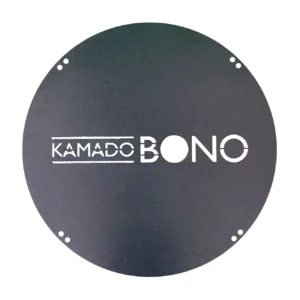
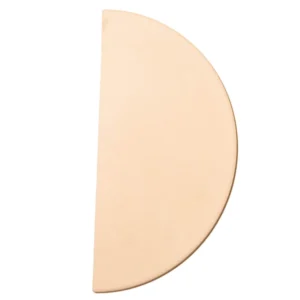
Kamado Bono grills include a heat deflector as part of the standard setup. It helps create a buffer between the fire and the food, distributing heat more evenly and preventing spikes during long cooks. Some deflectors are two-piece, allowing dual-zone setups for even more control.
Adjust your vents gradually
The bottom vent controls the oxygen (fuel for fire), and the top vent controls airflow and smoke. Open vents increase the heat, while closing them brings the temperature down. Always make small adjustments and give the grill time to react before adjusting again.
Minimize lid opening
Each time you open the lid, heat escapes and oxygen rushes in—this can cause sudden temperature changes. Open the lid only when necessary, and close it gently to avoid disturbing the airflow and internal balance.
Use a thermometer for precision
Built-in thermometers are helpful, but for best results, use a multi-probe digital thermometer to monitor both grill temperature and internal meat temperature. Models like the Inkbird IBT-4T offer remote monitoring via Wi-Fi and are ideal for long sessions.
Keep your Kamado clean
Built-up ash or grease can block airflow and affect temperature control. Regularly empty the ash drawer and clean the grates to ensure your grill functions smoothly and responds accurately to adjustments.
Conclusion
Maintaining steady temperature in a Kamado grill is a skill that pays off with every cook. With the right charcoal, proper airflow, and thoughtful setup, you can master any cooking style – from low-and-slow barbecue to high-heat searing. Kamado Bono grills are designed for precise control and long-lasting performance. Give it a bit of care, and it will reward you with outstanding results every time.